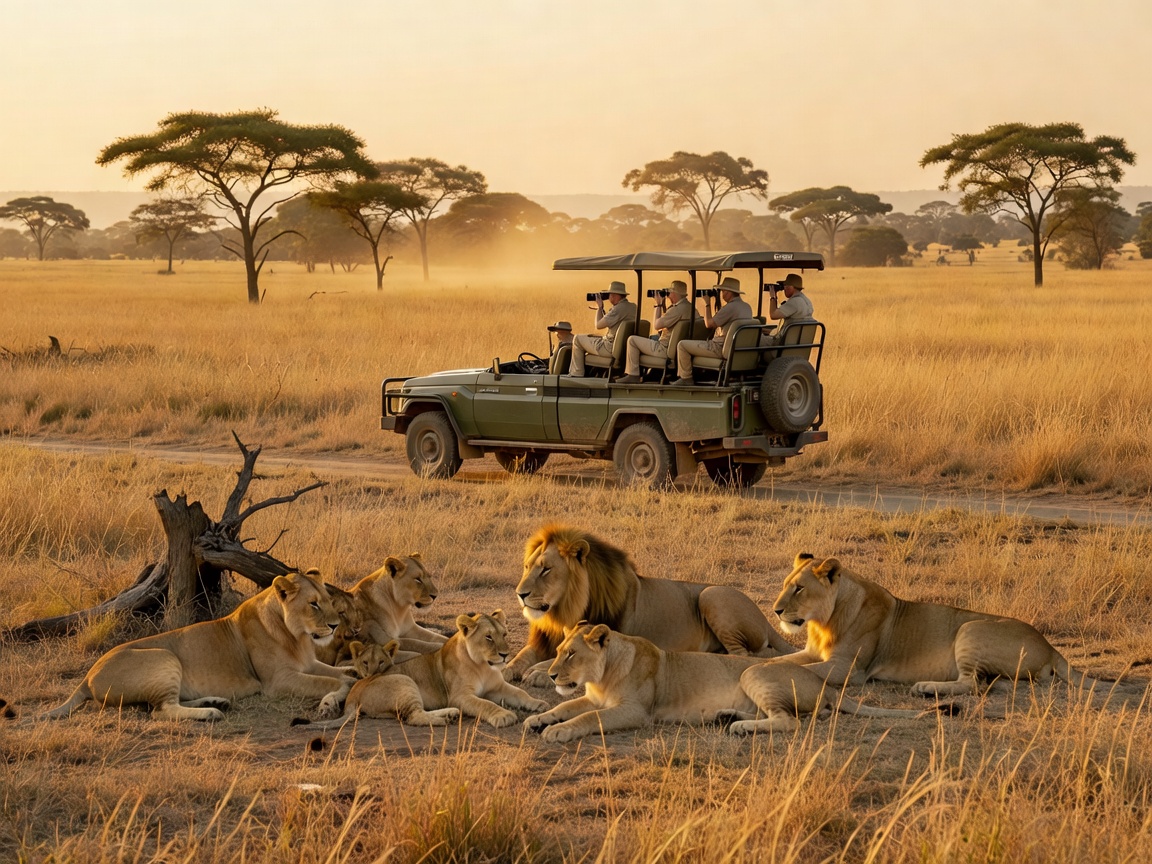
1. Use distance as a quality marker.
A good sighting is not the closest possible sighting. Ask how a camp manages vehicle pressure around predators, river crossings, dens and breeding birds. In public reserves, drivers may have less control over other vehicles, but they still control positioning, patience and whether to leave a crowded scene. In private concessions, the rules may limit vehicle numbers at a sighting, which can reduce stress and improve the viewing experience. Treat a guide who hangs back, switches off the engine and reads the animal’s behaviour as a luxury feature. Treat chasing, blocking and shouting as signs to leave.
2. Understand permits and specialist encounters.
Mountain gorilla trekking in Rwanda’s Volcanoes National Park and Uganda’s Bwindi Impenetrable National Park is governed by permit systems and strict conduct rules. Those rules exist to reduce disease risk and disturbance. Follow distance instructions, masking rules where required by the managing authority, time limits and guide directions. Chimpanzee tracking, meerkat habituation visits and walking safaris all have their own structures. Do not treat a permit as ownership of an encounter. It is permission to enter a controlled setting under the direction of rangers and guides.
3. Check conservation claims carefully.
Many camps support conservation through park fees, concession fees, lease payments, employment, anti-poaching support or community partnerships. The useful question is not “is it eco?” because that word can be too soft. Ask what the property contributes to: protected land, community conservancy payments, ranger support, habitat restoration, waste management or local training. In Kenya, community conservancies around the Mara and Laikipia have become an important model for linking wildlife habitat with landowner benefit. In Botswana, concession structures can limit density and fund protected-area management. The exact arrangements differ, so ask for plain explanations rather than slogans.
4. Keep predator viewing calm.
Big cats attract vehicles quickly. The instruction for travellers is simple: let the guide manage the scene, avoid sudden standing, keep voices low and do not pressure the vehicle to move closer. If a leopard is hunting, a cheetah is scanning, or lions are with cubs, the animal’s needs come before the photograph. Night drives require additional care because spotlights can affect behaviour when used badly. Good guides avoid lighting an animal directly for too long and often use red filters or reflected light where appropriate.
5. Make photography part of the ethics.
Disable artificial sounds where possible, avoid flash at night unless the guide has explicitly allowed it for the situation, and never ask a guide to reposition in a way that blocks an animal’s path. Drones are banned or heavily restricted in many protected areas and should not be packed as casual safari toys. Geotagging sensitive wildlife locations can create risk, especially for rhino. If you post images, describe the place broadly unless a public, managed site is already obvious and safe to name.
6. Respect people as part of the landscape.
Community visits, markets and village stops require consent and context. Ask whether visits are requested by the community, how payment is handled and whether photography is welcome. A luxury safari should not turn people into scenery between wildlife drives. The best operators explain land, culture and conservation without staging poverty or pressing for purchases. Your job is to listen, ask ordinary questions politely and accept “no photographs” immediately.
Practical standard: choose camps that can explain their wildlife rules in plain language. If the answer is only “our guides know best”, ask again.