1. Start with the international gateway.
Most safari routes begin by entering through a major city or regional aviation hub. Nairobi works for Kenya and onward East Africa links. Kilimanjaro and Arusha support northern Tanzania routes. Johannesburg is a major connector for South Africa, Botswana, Zambia, Zimbabwe and Namibia. Cape Town is often paired with a safari through Johannesburg or direct regional links where available. Kigali is the usual gateway for Rwanda gorilla trekking. The instruction is to avoid judging the route only by the international flight. The second movement, from gateway to camp, often decides whether the first safari day feels calm or shredded.
2. Respect light aircraft rules.
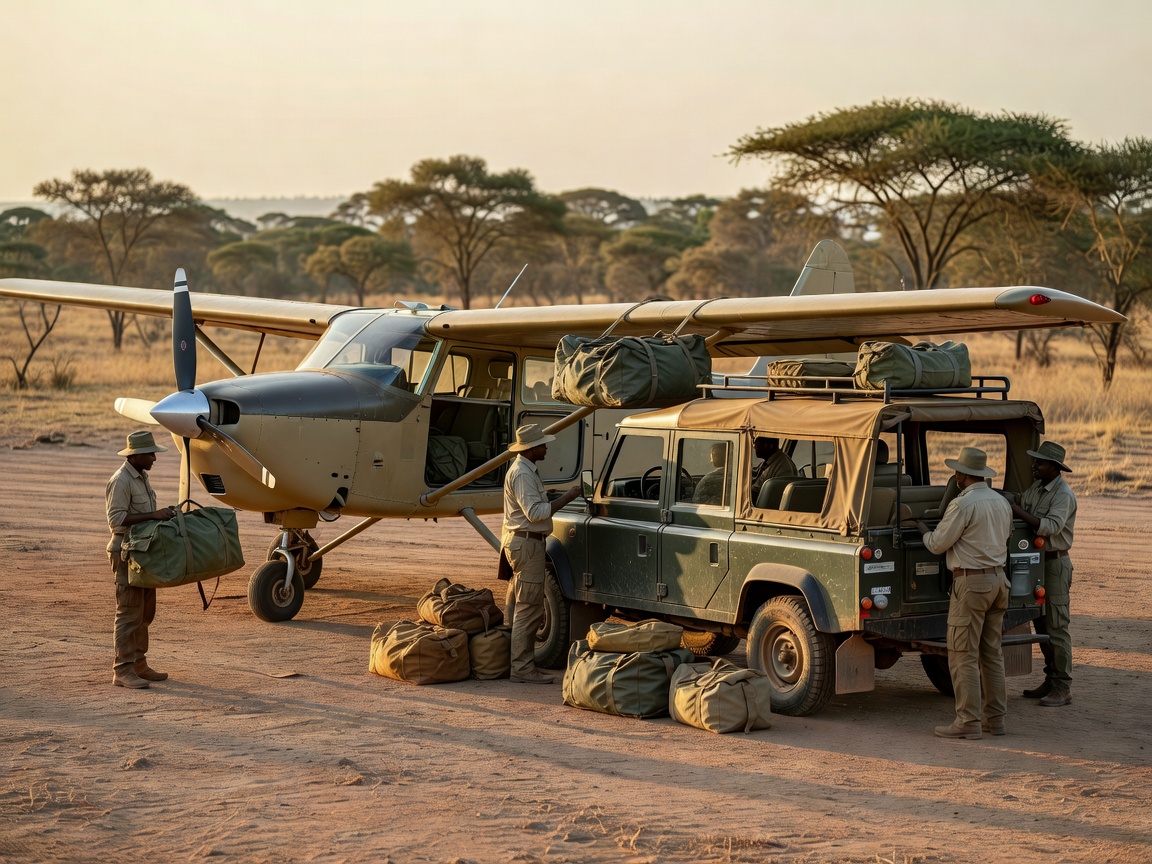
Bush flights are part of many high-end itineraries, especially in Botswana, Namibia and remote parts of East Africa. Operators commonly require soft-sided bags because luggage must fit into small aircraft holds. Weight limits vary by aircraft, routing and operator, so check the written allowance for your specific itinerary rather than assuming an airline standard. Hard suitcases are a common mistake. They may be refused, delayed or moved separately. Pack as if the strictest light aircraft sector controls the whole trip. If you need camera gear, medical equipment or mobility support, disclose it early so the route can be planned properly.
3. Use transit nights deliberately.
A night near Nairobi, Johannesburg, Arusha, Maun, Kasane, Windhoek or Kigali can be useful rather than wasteful. It protects against late international arrivals, allows luggage to catch up, and gives the first camp arrival a better chance of landing before afternoon activities. The wrong transit night is the one added automatically without purpose. The right one solves a timing risk. If the first camp requires a scheduled charter, do not build an itinerary that depends on an international arrival clearing immigration, collecting bags and reaching a small-aircraft departure with no margin.
4. Check documents and health advice early.
Passport validity rules, visa systems, yellow fever certificate requirements and entry procedures differ by country and nationality. Check official government sources for each passport holder and each border crossing. For UK travellers, the Foreign, Commonwealth & Development Office provides country travel advice, while destination governments publish entry requirements. Health preparation should be discussed with a qualified travel health professional, especially for malaria risk areas, routine vaccinations and personal medical circumstances. This site gives planning structure, not individual medical advice.
5. Plan for communications and money.
Remote camps may have limited mobile signal and variable Wi-Fi. Decide before travel whether that is a problem or part of the point. Tell family or colleagues how contact will work. Carry payment cards, some appropriate cash for tips where tipping is customary, and a record of emergency contacts. Do not assume every camp can change money or process every card during a connectivity outage. If gratuities are important to you, ask the operator for country-specific guidance in advance rather than improvising at the end.
6. Reduce transfer fatigue.
Every transfer has invisible cost: packing, check-out, road time, waiting, weighing bags, flight stops, camp orientation and unpacking. A route that looks efficient on a map can feel jagged on the ground. Limit consecutive one- and two-night stays. Put the most remote or activity-heavy camp after a recovery point. If gorilla trekking is included, avoid placing it after a punishing travel sequence. If children are travelling, build extra margin around early starts and small aircraft sectors. Calm logistics are not a luxury garnish. They are the frame that lets the safari work.