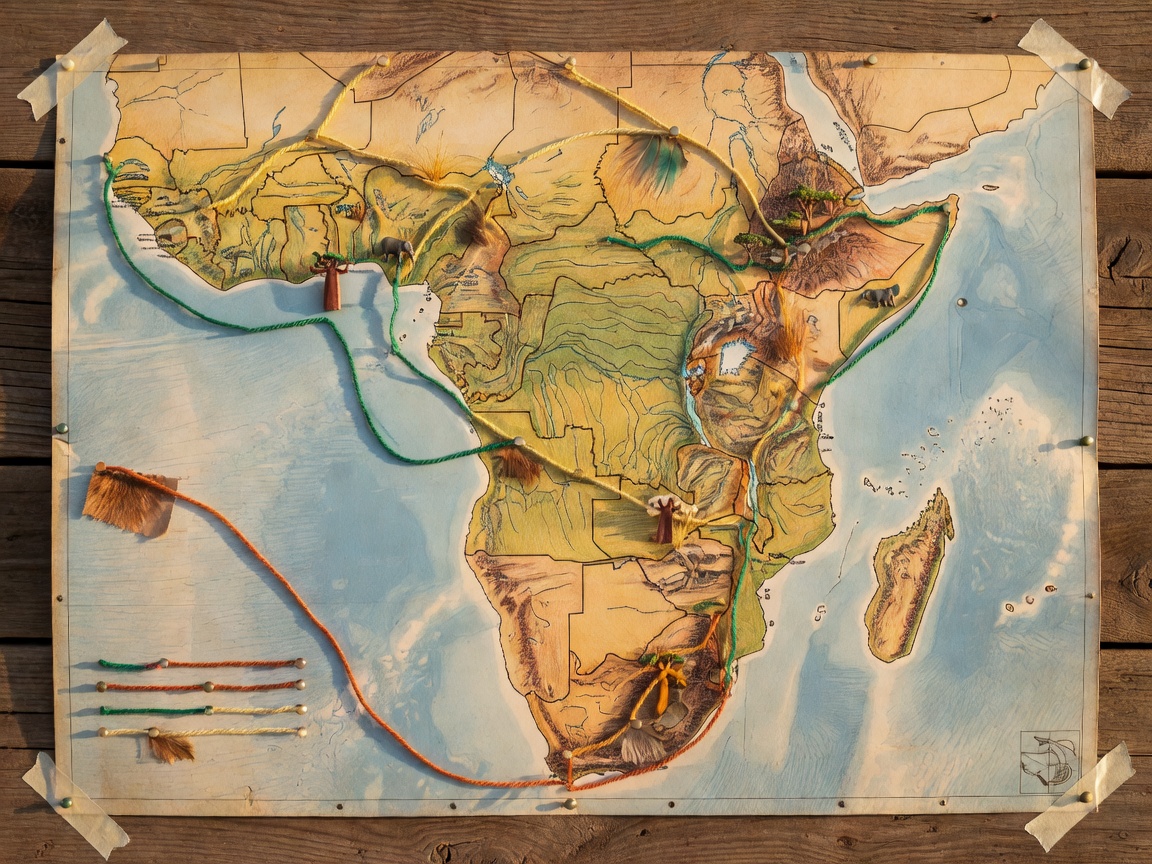
1. Pick one main wildlife promise.
Define the central reason for the journey in one sentence. If the sentence is “I want open plains, big-cat viewing and a chance of migration movement”, Kenya’s Maasai Mara and Tanzania’s Serengeti form the obvious axis. If it is “I want water, private guiding and a camp reached by light aircraft”, Botswana’s Okavango Delta moves up the list. If it is “I want a strong first safari with reliable infrastructure”, South Africa’s Greater Kruger area and adjoining private reserves are easier to build around. Namibia suits desert landscapes, Etosha waterhole viewing and dramatic road or fly-in circuits. Rwanda’s Volcanoes National Park is a specialist anchor for mountain gorilla trekking, usually paired with savannah elsewhere rather than stretched into a classic big-game circuit by itself.
2. Understand the regional pattern.
East Africa rewards travellers who like scale. The Serengeti ecosystem and Maasai Mara are linked by wildlife movement across a large grassland system, though border rules and park logistics mean the traveller experiences them through separate national arrangements. Tanzania adds Ngorongoro Crater, Tarangire and Ruaha for contrast. Kenya can combine the Mara with Laikipia, Amboseli or Samburu. Southern Africa is more varied in format. Botswana often uses small aircraft between camps, with high-value private concessions around the Delta and Linyanti. South Africa offers road and air access, strong guiding infrastructure and easy links to Cape Town. Namibia often involves larger distances, stark scenery and a different rhythm.
3. Treat seasons as trade-offs, not labels.
Do not ask only for the “best” month. Ask what becomes easier and what becomes harder. Dry periods usually concentrate animals near water and thin out vegetation, so sightings may be clearer. Green periods can bring lower visitor pressure, dramatic colour and young animals, but roads, insects and grass height can change the feel. Migration river crossings in the Mara and northern Serengeti are not scheduled performances. They depend on rainfall, grazing and animal movement. A route built solely around one crossing moment is fragile; a route built around good habitat, patient guiding and enough nights has better odds of feeling complete.
4. Decide whether to combine countries.
Combining countries can be excellent when each country has a distinct role. Kenya plus Tanzania can make sense for a long East Africa safari, but border transfers and duplicate park styles need careful handling. Botswana plus South Africa works well when Delta wilderness is paired with Cape Town or the Greater Kruger. Rwanda plus Tanzania or Kenya can join gorilla trekking with plains game. Namibia plus Botswana is possible, but distances and flight routing can become expensive and tiring. The instruction is simple: every border should add a different experience, not another stamp.
5. Build a sane pace.
Use three nights as a practical default for a high-quality camp unless the stop is only a transit night or a specialist add-on. Two nights can work in a compact reserve, but it gives little margin for weather, a quiet drive or fatigue. One-night safari stops are mostly logistics wearing a safari hat. On a luxury trip, the most valuable thing is often not another property. It is the second morning with the same guide, the freedom to skip a drive, or the chance to sit at a hide when the radio is quiet.
Route test: read your itinerary aloud as habitats, not brands: “Mara plains, Laikipia conservancy, Delta floodplain, Kruger woodland.” If it sounds varied and travel days are controlled, the route is likely doing its job.