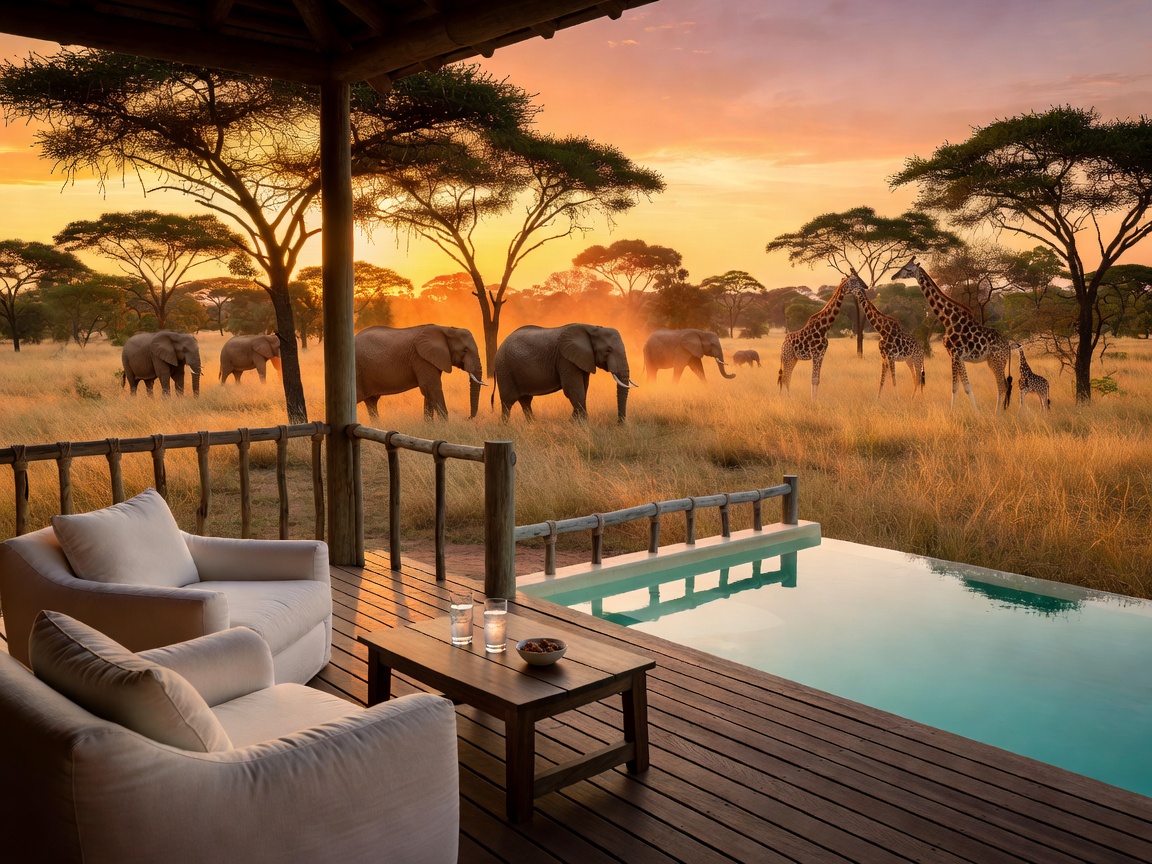
1. Separate lodge type from lodge quality.
A permanent lodge usually has stronger infrastructure: solid walls or substantial canvas, larger bathrooms, more reliable power, pools and broad dining spaces. That can be ideal in South Africa, Kenya, Tanzania and Namibia, especially for travellers who want comfort after long drives. A tented camp is not automatically basic. Many high-end safari tents have proper beds, plumbed bathrooms and private decks. The difference is atmosphere and footprint. A mobile camp follows seasonal wildlife movement or occupies a lighter site. It can feel closer to the bush, but it may involve simpler systems, bucket-style showers in some operations and fewer hard surfaces. Choose the format because it suits the route, not because a brochure word sounds more authentic.
2. Ask who controls the land.
Land status shapes the experience. National parks and public reserves can offer superb wildlife, but vehicle rules and visitor density are set by public management structures. Private concessions, common in Botswana and parts of Zambia and Zimbabwe, often allow off-road driving where permitted, night drives and tighter control of vehicle numbers. Community conservancies in Kenya, including areas around the Maasai Mara and Laikipia, can combine wildlife viewing with land-use benefits for local communities. Private reserves adjoining Kruger National Park, such as Sabi Sand and Timbavati, are known for skilled guiding and flexible drives. The practical instruction is to ask which activities are allowed, how sightings are managed and whether vehicles from outside areas can enter.
3. Compare guiding before décor.
Good guiding turns a drive into interpretation. Ask whether the property uses guide-and-tracker teams, whether walking safaris are led by qualified guides where offered, and how guide allocation works over several nights. In big-cat areas, guiding quality shows in patience and positioning. In bird-rich wetlands, it shows in quiet identification and reading behaviour. In desert areas, it shows in tracks, plants, geology and small life. A lodge can be visually impressive and still provide a thin safari if guiding is rushed or radio-led. Conversely, a simple camp in excellent habitat with disciplined guiding can feel more luxurious than a photogenic lodge with crowded sightings.
4. Match comfort to climate and movement.
Air conditioning, plunge pools, indoor baths and extensive wine cellars may matter in some regions and much less in others. In the Okavango Delta, the luxury may be a deck over water and easy access to floodplain activities. In Namibia, shade and cooling can be important after long scenic transfers. In Rwanda, boot cleaning, drying spaces and proximity to gorilla trekking headquarters can be more useful than a dramatic pool. For families, check room layouts, minimum ages for walks, vehicle sharing and childcare arrangements. For honeymoon-style trips, check privacy, noise between units and whether private dining is genuinely easy or merely possible.
5. Read the itinerary from camp to camp.
A route with five famous lodges can still fail if transfers are awkward. Check whether a camp is reached by road, scheduled light aircraft, private charter or boat. Ask how long the transfer takes from airstrip to camp and whether that transfer is also a game drive. If a camp requires strict soft-bag luggage, the whole itinerary should respect that constraint. Avoid using one exceptional property as an excuse for a weak route. A luxury safari is cumulative: arrival rhythm, guiding continuity, laundry timing, meals, rest and wildlife access all compound.
| Format | Useful when | Watch point |
|---|---|---|
| Permanent lodge | Comfort, stable services, families, easy downtime | Can feel removed from the bush if badly sited |
| Tented camp | Atmosphere, soundscape, lighter footprint | Canvas quality and bathroom arrangements vary |
| Mobile camp | Seasonal wildlife movement and remote feel | Comfort systems may be intentionally simpler |